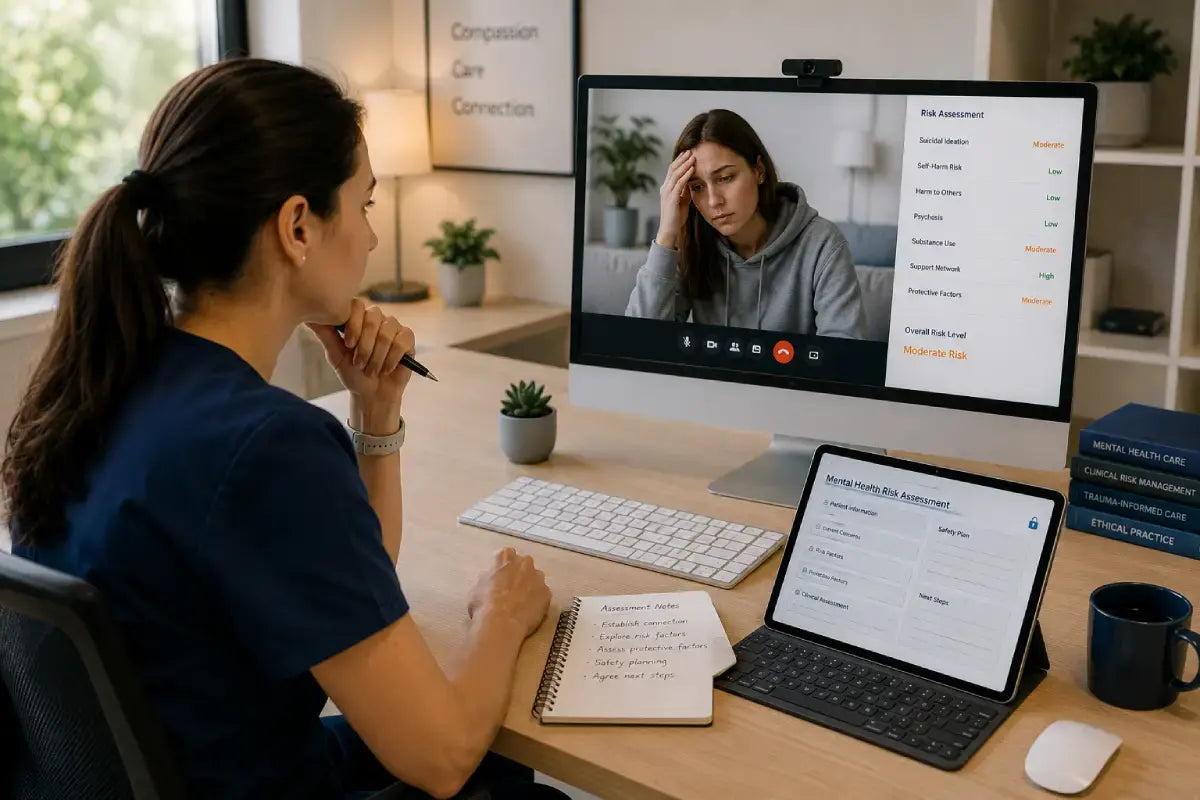
Learn how to conduct safe and effective remote mental health risk assessments using structured clinical frameworks.
5(2 ratings)
10 students enrolled
About This Course
Phishing attacks are one of the most common and damaging cyber threats in healthcare. A single click on a suspicious email can give criminals access to patient data, disrupt NHS systems, and put lives at risk.
This course builds your phishing awareness for healthcare workers so you can spot suspicious emails, texts, and calls before any damage is done. You will learn how social engineering attacks work, what the warning signs look like, and what to do if you think you have been targeted.
Email security in healthcare is not just an IT problem — it is everyone's responsibility. This course shows you how your actions at your desk can either protect or expose your organisation to a major data breach.
Whether you work in a hospital, GP surgery, community clinic, or care home, this course gives you practical tools to stay safe online and contribute to a stronger cyber security culture in your workplace.
What's Included
Free CPD certificate on completion
Unlimited exam retakes
Instant access to all course materials
Lifetime access to the platform
Works on any device
Key Features
Short, engaging modules — learn in your lunch break
CPD accredited for professional development logs
Access on smartphone, tablet, or computer
Tutor support available if needed
Covers NHS cyber security training requirements
Practical exercises using real-world phishing examples
Who Is This Course For?
All NHS and healthcare staff with access to email or digital systems
GP surgery receptionists and admin teams
Care home managers and support workers
Clinical and non-clinical staff in any healthcare setting
Anyone completing mandatory NHS cyber security training requirements
Why Take This Course?
Healthcare is the most targeted sector for phishing attacks in the UK
Protects patient data and prevents costly data breaches
Supports compliance with NHS DSPT and GDPR obligations
Short, easy to understand — no technical background needed
Builds a stronger email security culture across your whole team
Counts towards mandatory cyber threat recognition training requirements
What You'll Learn
Explain how phishing attacks target healthcare workers and why the sector is a prime target
Identify the warning signs of phishing emails, smishing texts, and vishing calls
Recognise social engineering attacks including pretexting and impersonation
Follow the correct steps when you suspect a phishing attempt at work
Apply good email security in healthcare settings to reduce daily risk
Report cyber incidents correctly using your organisation's procedures
Understand the consequences of a successful phishing attack on patient data
Contribute to a positive NHS cyber security training culture in your team
Start Your Role as a Telehealth Support Officer Today!
Gain the skills needed to support telehealth services with confidence. This bundle focuses on assisting patients, managing virtual appointments, and handling basic technical support. Backed by a money-back guarantee.
There is a multiple-choice exam at the end of the course. You need to score at least 60% to pass. Exam retakes are free and unlimited.
Certification
After passing the exam, you will receive a CPD certificate in phishing awareness for healthcare workers. You can download it instantly or request a printed copy.
Each module is designed to build your knowledge step by step. Click on a module title to see what it covers.
Module 1: Today's Healthcare Phishing Threats
Email, Text, Voice, QR Code, and Fake Portal Attacks
Healthcare Data, Worker Access, and Cybercriminal Motives
Credential Theft, Malware, and Ransomware Entry Points
Patient Safety, Downtime, Privacy, and Trust Consequences
Module 2: AI-Driven Social Engineering
AI-Generated Phishing and Personalized Lures
Deepfake Voice, Fake IT Support, and Executive Impersonation
Urgency, Fear, Authority, Trust, and Helpfulness Traps
Fatigue, Workload, Alert Overload, and Fast-Decision Risk
Module 3: Healthcare-Specific Phishing Scenarios
Fake EHR, Patient Portal, and Telehealth Alerts
Billing, Insurance, Claims, Refund, and Payment Fraud
Vendor, Supplier, Lab, Pharmacy, and Third-Party Phishing
Mobile Links, QR Codes, MFA Prompts, and Account Takeover
Module 4: Role-Based Risk and Workplace Judgment
Nurses, Physicians, and Clinical Workflow Risks
Front Desk, Scheduling, and Patient Identity Risks
Billing, Finance, HR, and Business Email Compromise Risks
IT, Help Desk, Managers, Executives, and Privileged Account Risks
Module 5: Legal, Ethical, and Compliance Responsibilities
HIPAA Security Awareness and Training Requirements
HITECH, Breach Notification, OCR Enforcement, and Corrective Action Plans
CISA, HHS 405(d), HICP, NIST CSF, and FTC Guidance
Patient Confidentiality, Minimum Necessary Access, and Ethical Duty
Career and Job Opportunities
Completing a phishing awareness for healthcare workers course can open doors to a range of roles in healthcare. Below are some examples of positions this training can support, along with typical UK salary ranges: Cyber Security Awareness Officer (£28,000–£42,000 per year), NHS Digital Security Trainer (£30,000–£44,000 per year), Information Governance Officer (£28,000–£40,000 per year), Healthcare IT Support Specialist (£25,000–£38,000 per year), and Data Protection Officer, Healthcare (£40,000–£60,000 per year). Job outcomes depend on your location, experience, and the employer, so results may vary from person to person.
Frequently Asked Questions
Is this course suitable for non-technical staff?
Yes. It is written in plain English with no technical jargon. Anyone in a healthcare setting can complete it.
Does this course meet NHS DSPT requirements?
The course covers content aligned with NHS DSPT cyber security awareness standards. Check your organisation's specific requirements.
How long does the course take?
Most learners complete it in around 4–5 hours.
Will I get a certificate in phishing awareness for healthcare workers?
Yes. A CPD-accredited certificate is issued on passing the exam.
Can I take this on behalf of my whole team?
You can enrol multiple staff members. Contact us for team pricing options.
Does this cover text message and phone phishing?
Yes. Smishing and vishing are covered in detail alongside email phishing.
Is there a time limit to complete the course?
No. You have lifetime access and can complete it at your own pace.
What happens if I fail the exam?
You can retake it as many times as needed at no extra cost.
What You'll Learn
Explain the key differences between face-to-face and remote mental health risk assessment
Apply structured risk assessment frameworks in a digital or telephone setting
Conduct a virtual suicide risk assessment safely and thoroughly
Carry out digital mental health triage to prioritise care appropriately
Use online risk formulation techniques to guide clinical decision-making
Manage remote safeguarding in mental health scenarios effectively
Course Curriculum
Course contents:
Lifetime Access
Learn at your own pace with unlimited access to all course materials forever
Certificate
Earn a certificate of completion to showcase your new skills to employers
Money-Back Guarantee
30-day money-back guarantee if you're not completely satisfied